
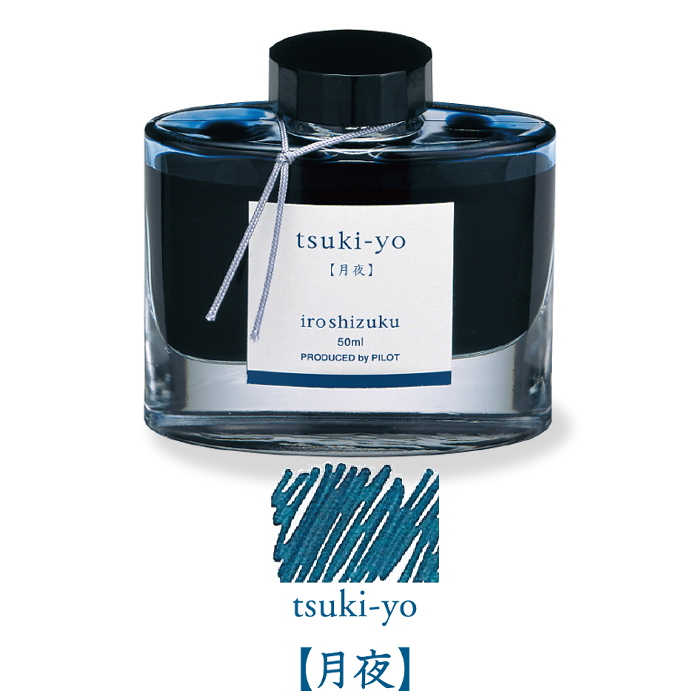
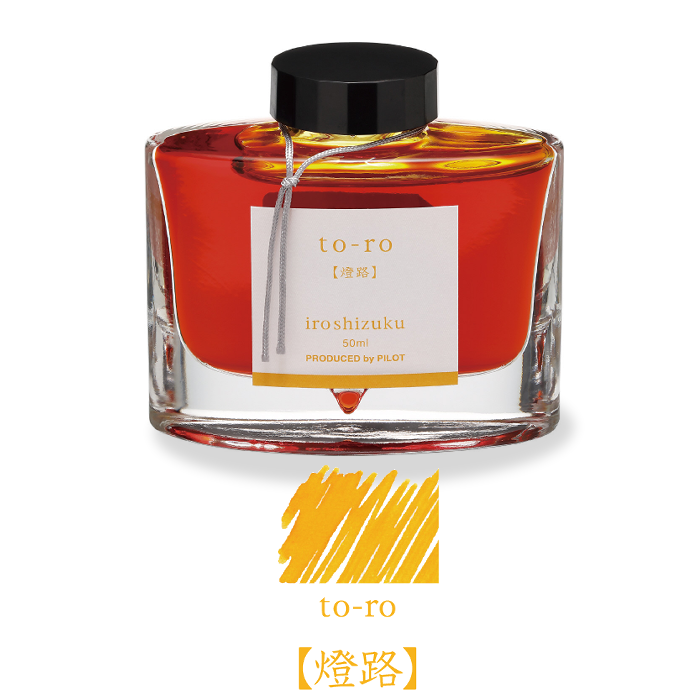
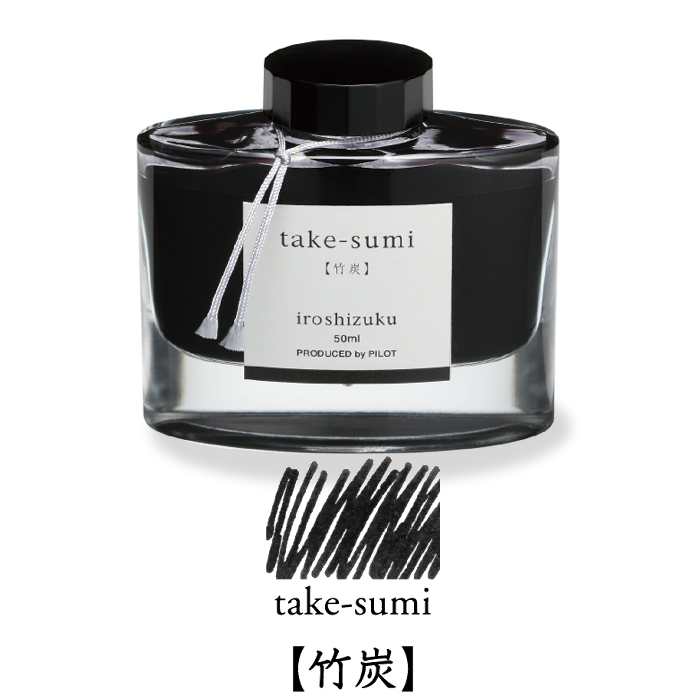
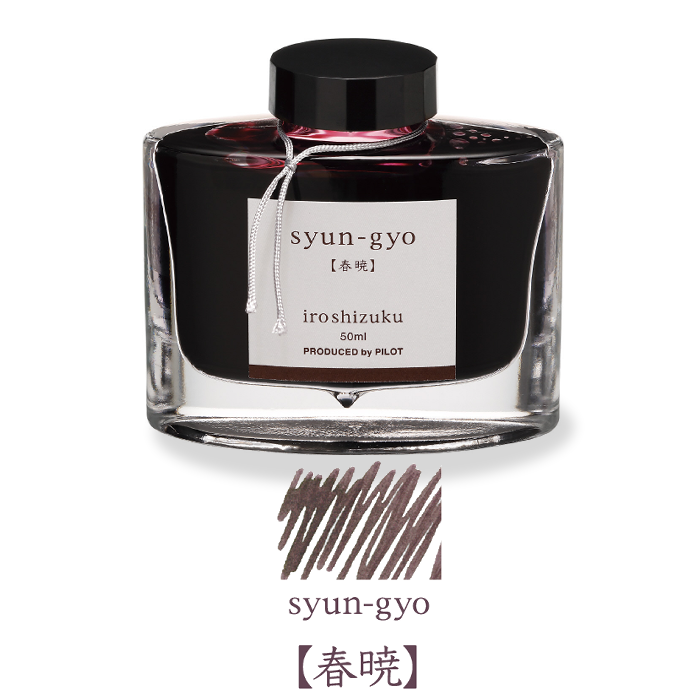
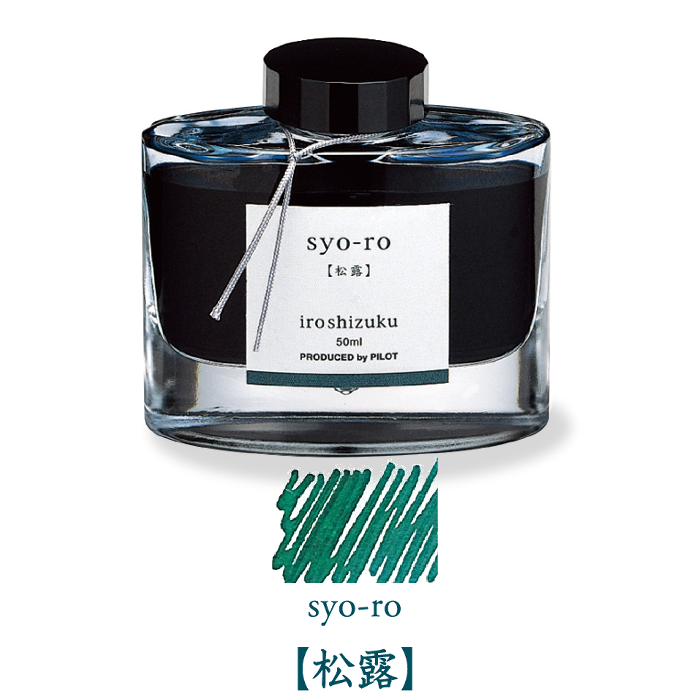
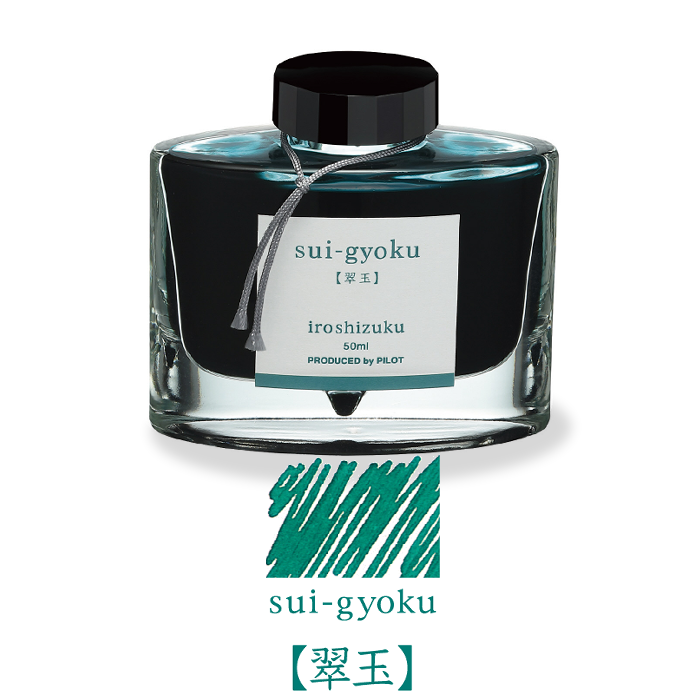
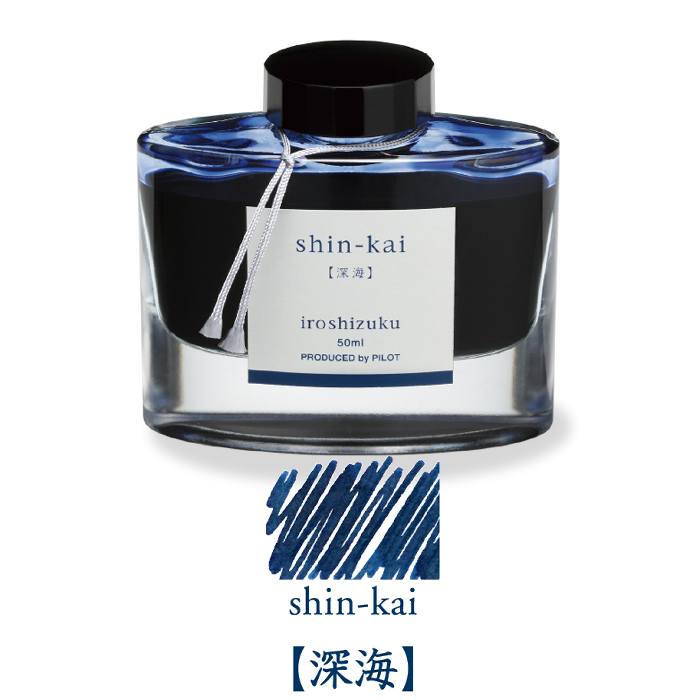
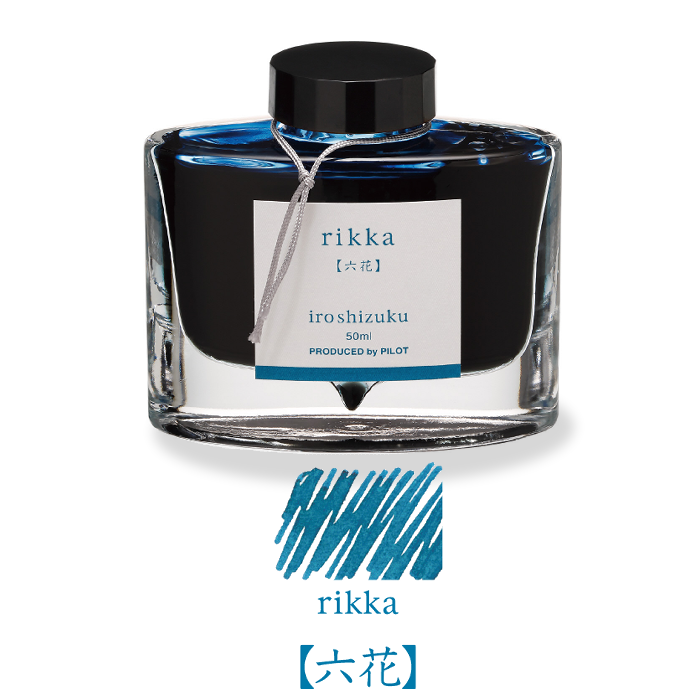
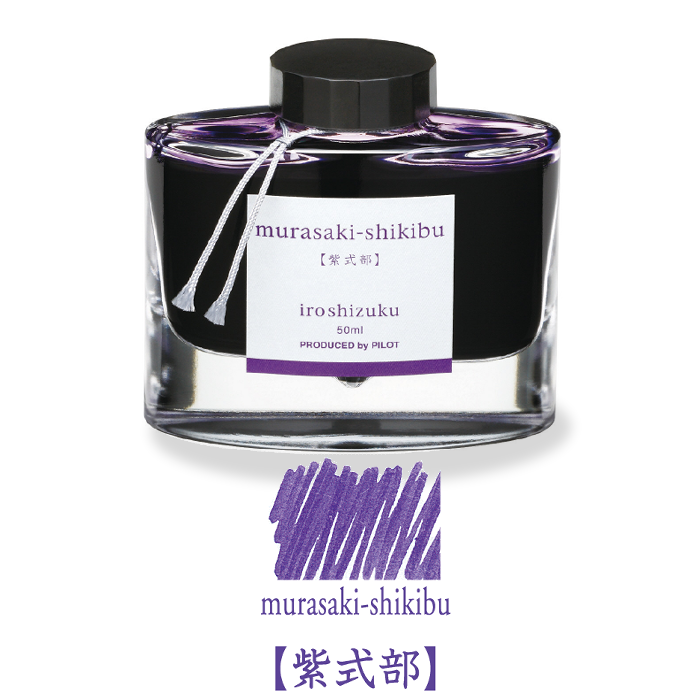
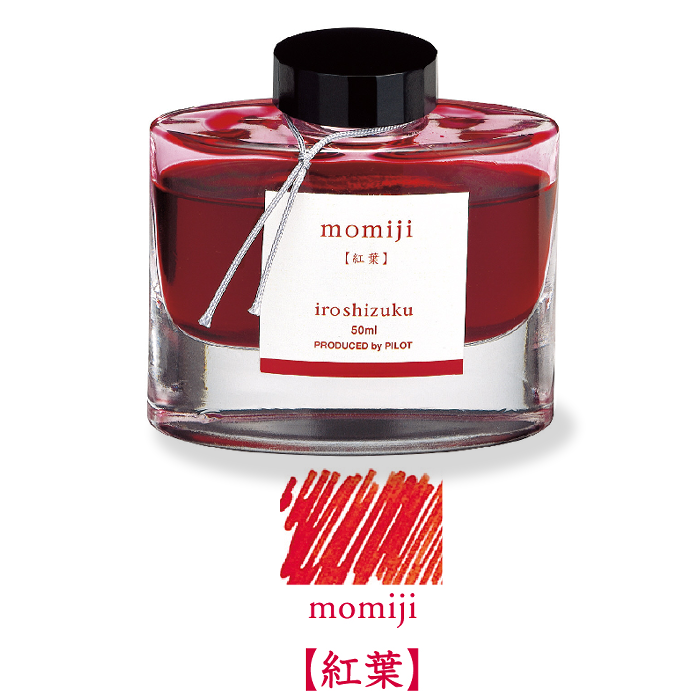
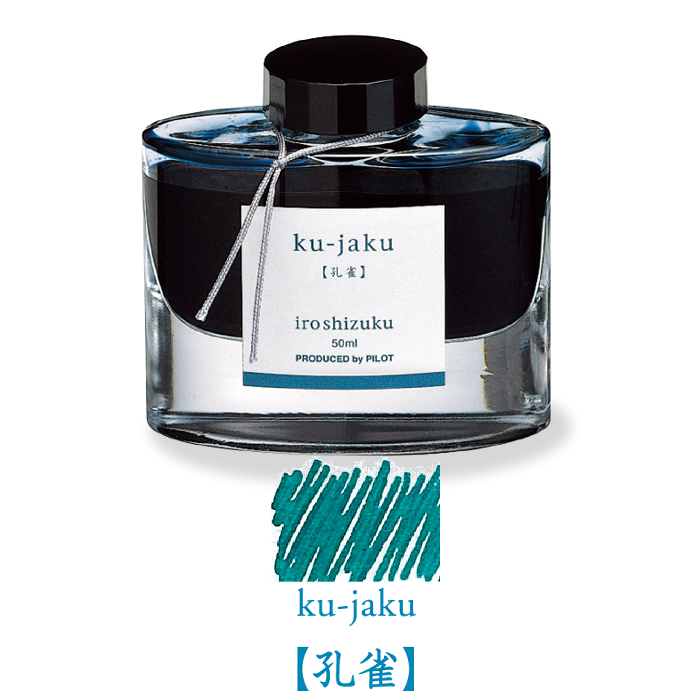
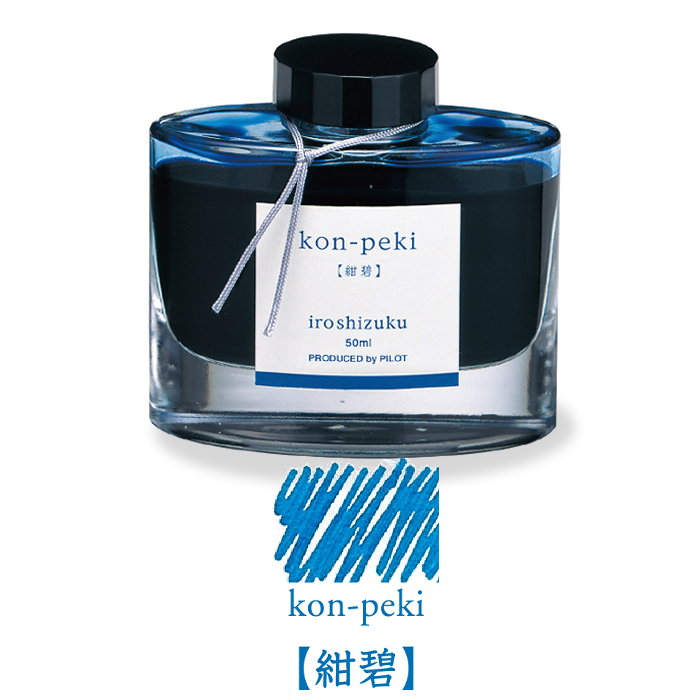
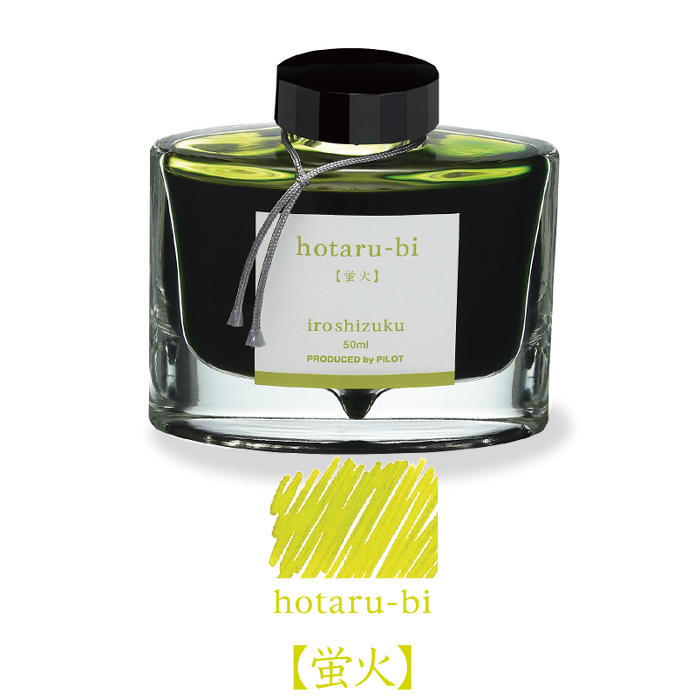
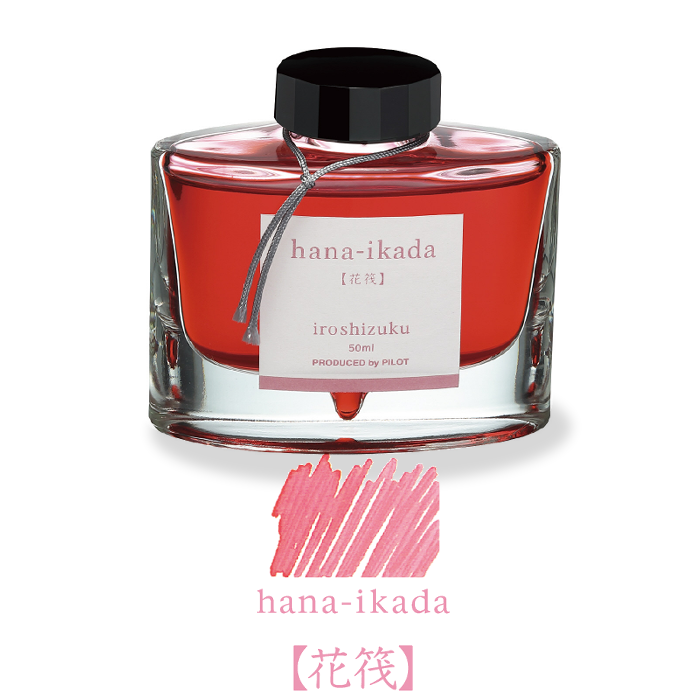
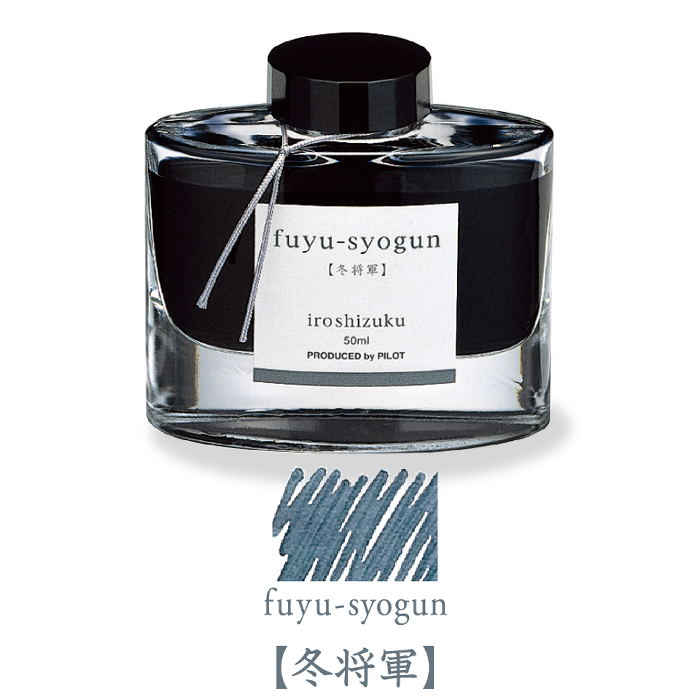
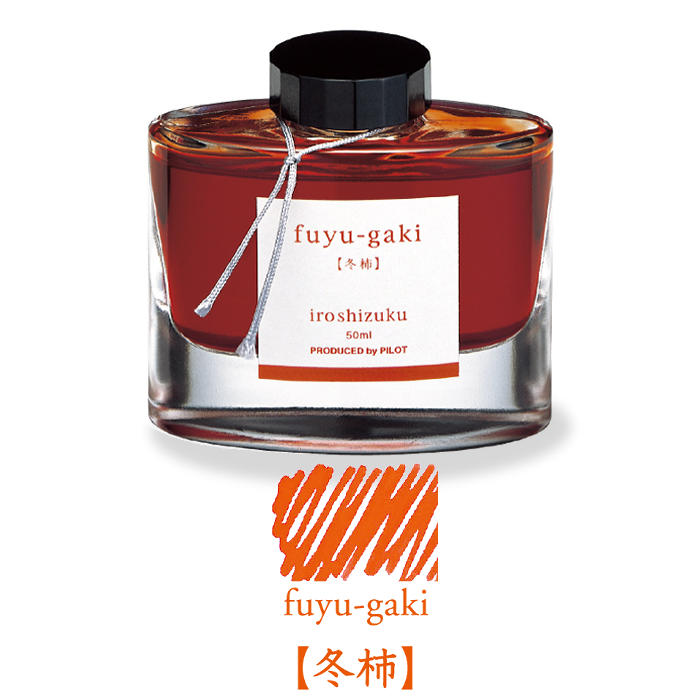

Pilot Iroshizuku Fountain Pen Ink
Before you fill your pen with Pilot Iroshizuku ink, we think you’ll find yourself admiring the box and the bottle in which it comes. The box is cardboard, but presents a brushed-steel finish with a simple label that is Japanese minimalism at its finest. The bottle inside is also beautifully shaped, and we think that this is the most carefully presented ink that we have ever sold.
“Iroshizoku” is a compound Japanese word – actually two words – from “Iro” (色), ‘colour’, and “Shizoku” (滴), ‘droplet’ or, more beautifully, ‘dew’. Furthermore, each colour of these inks has its own story, whether of landscape, plants, or even times of day, which we have tried to detail in the ‘Additional Information’ tab.
Pilot Iroshizuku inks are sold in 50ml bottles.
£39.00
Additional Information
アジサイ
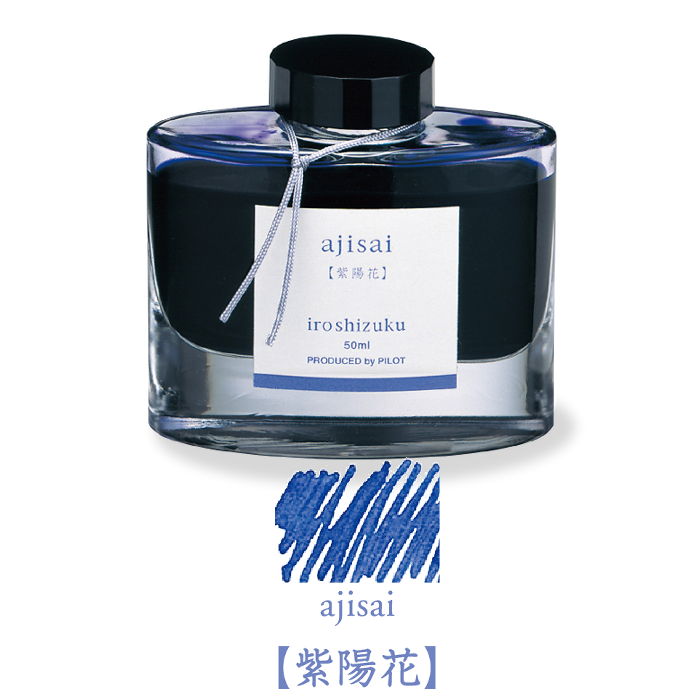
Ajisai Hydrangea
Hydrangeas are much-valued in Japan. They flower there very shortly before the rainy season (which knocks off all the petals), so the time for viewing, and enjoying, them is very short. The most valued are the dark blue-purple ones, as represented in Pilot’s Agisai ink
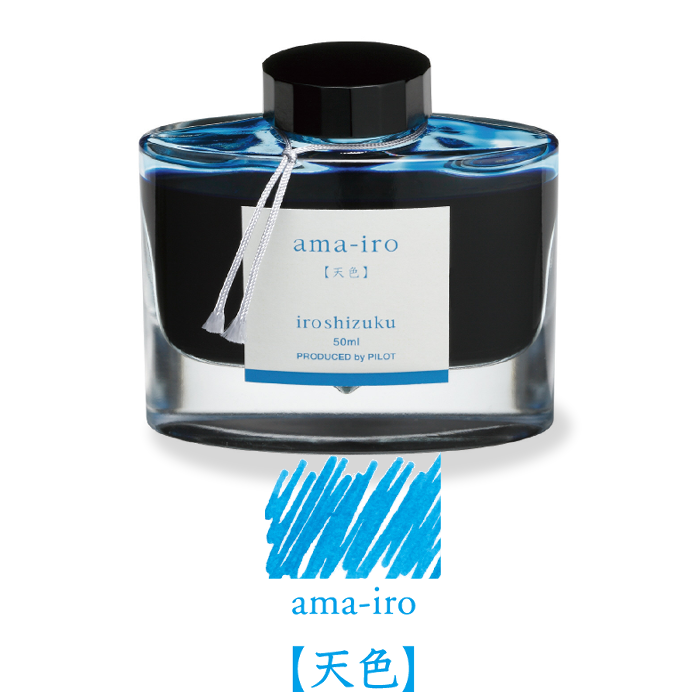
天色
Ama-Iro Sky Blue
‘Sky Blue’ is possibly a rather loose translation of Ama-Iro, which our tame Japanese-to-English converter tells us actually means “Sweet Red Peppermint“, which this ink clearly isn’t. This blue is, however, one of the traditional Japanese colours, but its significance is world-wide, for who isn’t happier when the sky is blue? The color is inimically used in the famous Edo picture of Mount Fuji, and also features prominently in “The Great Wave Off Kanagawa“. Computer geeks might like to know that the RGB value for Ama-Iro is #0086CC (0:134:204), and printers that the CMYK value is 85:32:00:00.
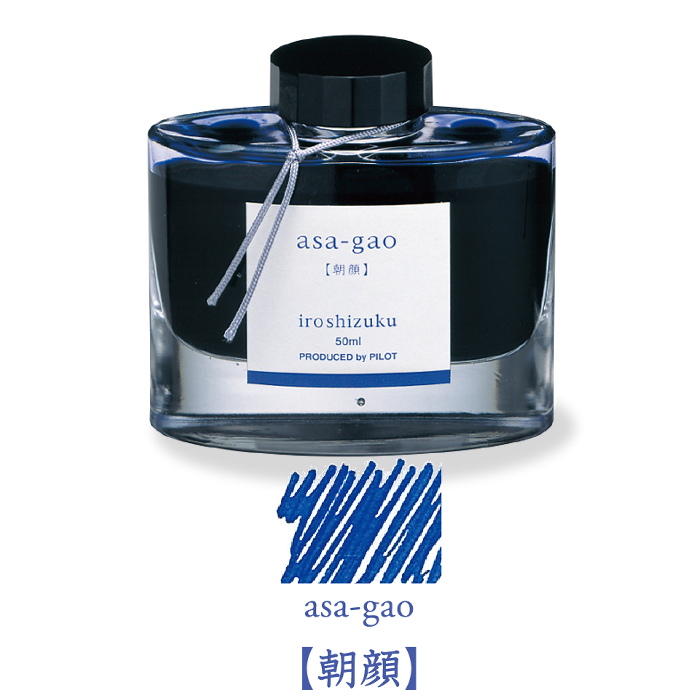
朝顔
Asagao Morning Glory
Unlike the hydrangea, which many would say originated in Japan, Ipomoea Nil, or Morning Glory, is a plant introduced to Japan from South America. It is is a climbing annual herb with flowers that can be several centimeters wide that are much valued for their beautiful colour.
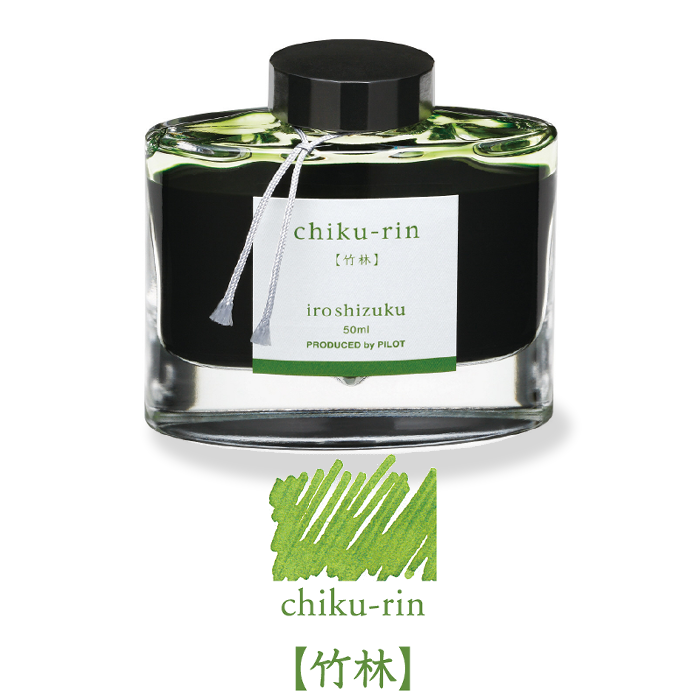
竹林
Chiku-Rin Bamboo Grove
Bamboo is a plant that will, if introduced into a domestic garden, up-turn paving slabs and push over walls (i.e. best grown in a big bucket). In Japanese culture, it is valued for this strength and hardiness. Bamboo has such a dense root structure that it is, apparently, earthquake-proof.
ふわ柿
Fuyu-Gaki Winter Persimmon
(otherwise spelled “Fuyu No Kaki“) This is the fruit of Diospyros Kaki, one of the oldest plants in cultivation. In Oriental culture, the persimmon is believed to have mystical power that will cure back-ache, foot pain, and headaches. This ink celebrates the colourful addition these fruit make to a winter garden.
冬休み
Fuyu-Syogun Winter Holiday
This is the Japanese term for what is, in the UK, Christmas and New Year. In Japan, it is referred to as the Golden Week, but this ink celebrates the weather rather than the name. The term can also mean “Winter Army“, which can be seen as a reference to snow flakes.
ふ米耳
Ina Ho Rice Ear
This is the colour of the ripe ear of rice, ready to be picked, cooked and eaten. A welcome colour.
霧雨
Kiri Same Light Rain
This is a kind of rain known only in Japan and North Wales. It’s too lazy to go round you, so it tries to go straight through. Literally, the Japanese characters translate as “drizzle”, and this colour is that exciting. But you need it to show off the sky blue.
こん ぺき
Kon Peki Scent
Kon Peki is the Japanese for ‘perfume’. In the western world, the word ‘perfume’ suggest pink – we think of perfume as being feminine – but Kon Peki is a mid blue associated with the ruling classes.
コスモス
Kosumosu Rubbing
I’m not sure about the translation of this one. My Japanese friend covered her mouth and giggled when I tried to say it, so perhaps I got it wrong. It is, however, a lovely shade of pink.
More to follow soon.